
CBD Stone
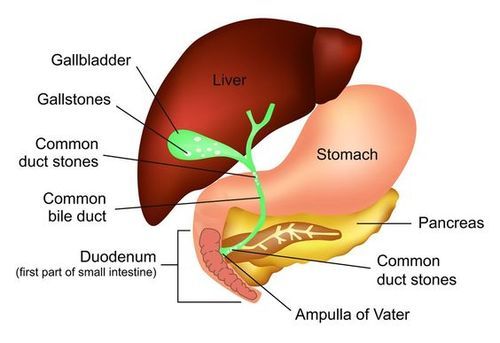
Common bile duct (CBD) stones are a common condition, affecting 10-20% of patients with gallstones. They can lead to serious complications such as obstructive jaundice, acute suppurative cholangitis, and acute pancreatitis. Early diagnosis and prompt treatment are crucial for managing CBD stones effectively.
Recent meta-analyses indicate that both endoscopic ultrasonography and magnetic resonance cholangiopancreatography are highly sensitive, specific, and accurate for diagnosing CBD stones. Endoscopic ultrasonography is particularly noted for its superior sensitivity compared to other methods.
For patients with symptomatic gallstones, management strategies vary based on their risk of having CBD stones (low, intermediate, or high probability). High-risk patients typically benefit from single-stage laparoscopic CBD exploration and cholecystectomy, which has shown better outcomes in terms of technical success and shorter hospital stays compared to sequential ERCP followed by laparoscopic cholecystectomy.
In many medical centers, ERCP followed by laparoscopic cholecystectomy is the preferred approach for treating patients with both CBD stones and gallstones. Patients deemed to have intermediate probability of CBD stones after initial evaluation may require additional biliary imaging.
Those with low probability of CBD stones can proceed directly to cholecystectomy without further evaluation. Endoscopic sphincterotomy and endoscopic papillary balloon dilation are primary methods used during ERCP to manage CBD stones. Endoscopic papillary large balloon dilation is increasingly used for larger or more challenging CBD stones.
Scheduled follow-up ERCP may be considered for patients at high risk of recurrent CBD stones.
copyright © 2024, All rights reserved | Dr. Anand Nagar